
Newsletter Subscription
Enter your information below and subscribe to our newsletter

by Gregory, Chief Purchase Investigator
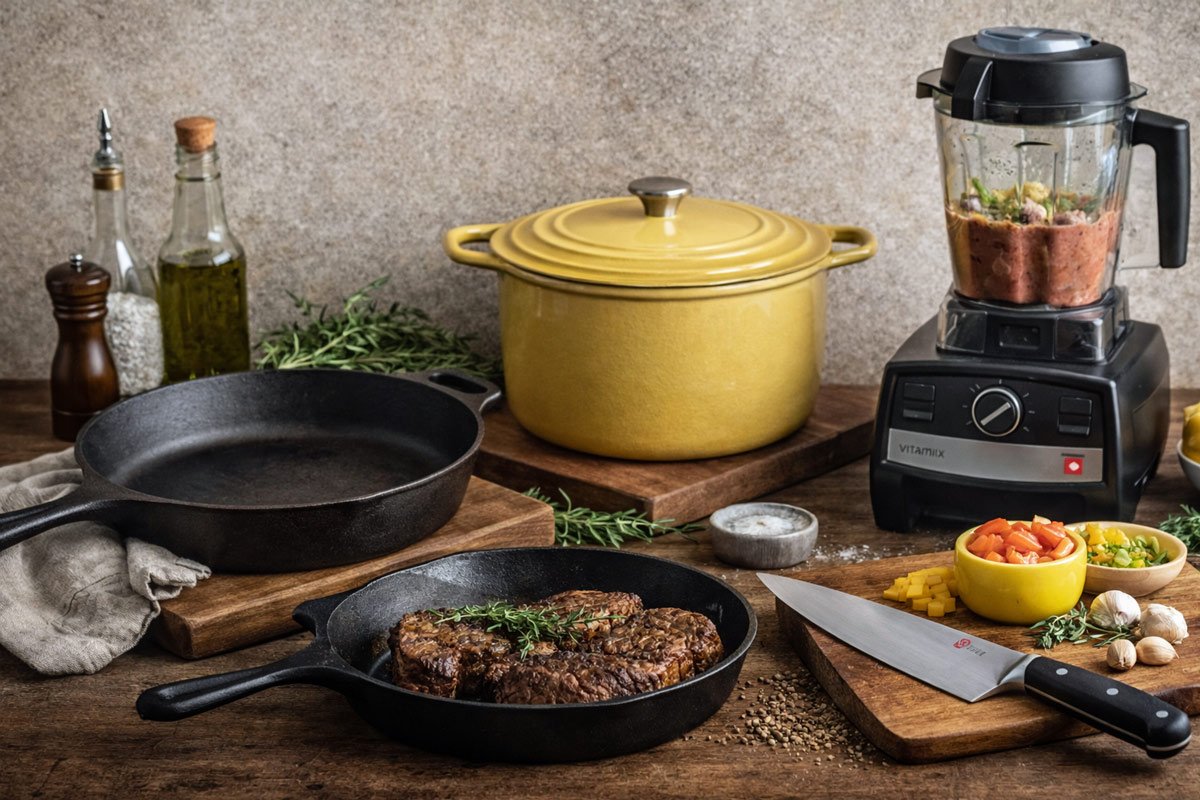
Here is the math nobody shows you when you buy a cheap pan. A $25 nonstick skillet, replaced every two years, costs $250 over twenty years. A $40 Lodge cast-iron skillet, properly maintained, costs $40 over twenty years — and unlike the nonstick pan, it performs better at year twenty than at year one.
The buy it once home goods movement is not about minimalism. It is not about owning less, living simply, or any of the other things people use to justify expensive purchases. It is a math argument. It is the observation that cheap goods carry a hidden tax — the tax of replacement, the tax of frustration, and the compounding cost of paying for the same category over and over because the first purchase was designed to fail.
I have been investigating this. Specifically, I wanted to know which product categories genuinely reward a single quality purchase, which ones are marketing traps disguised as investments, and what the actual lifetime cost difference looks like when you run the numbers honestly.
What I found is that buy it once home goods exist in a fairly narrow set of categories. Not everything benefits from premium spending. But in the categories where it does apply, the financial case is almost always overwhelming — and the products that qualify tend to share a specific set of characteristics that have nothing to do with price.
Affiliate Disclosure: Shop My Ass Off participates in the Amazon Services LLC Associates Program and other affiliate programs. If you purchase through our links, we may earn a small commission at no extra cost to you. Gregory’s recommendations are based on independent research, not compensation.
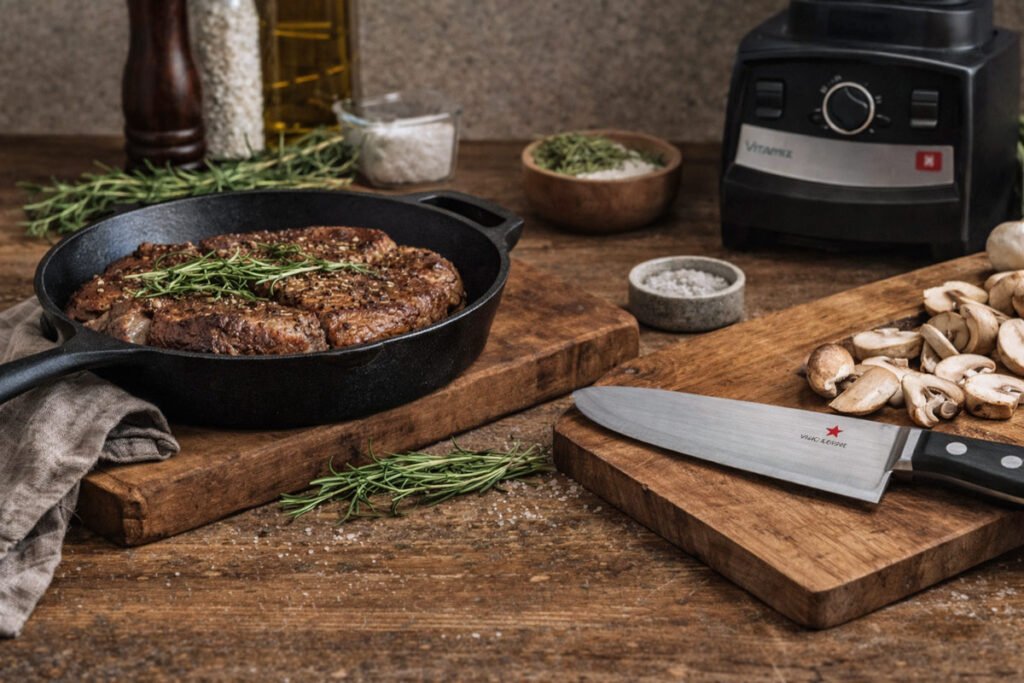
The phrase gets used loosely, so I want to define it precisely. A buy it once home good is not simply an expensive item. Price alone is not the qualifier. I have seen $400 pans that needed replacement after three years and $40 pans that are still in daily use after forty.
The actual criteria are:
I call this The 20-Year Test: will this product still be functional and performing well in twenty years if I maintain it reasonably? Most products fail this test immediately. A genuine buy it once home good passes it without hesitation.
Gregory’s Verdict: A product qualifies as a true buy it once home good if it has a lifetime or 25-year+ warranty, uses repairable construction with no glued components, and has a documented history of lasting decades in real households. Price is a secondary consideration.
The honest answer is: it depends entirely on the category. For cookware, knives, and major appliances, the financial case is strong. For consumer electronics, it almost never applies — technology obsolescence makes products with long lifetimes irrelevant in that space. For furniture, it depends on the specific category and your circumstances.
Here is the twenty-year cost comparison across the most common buy it once home goods categories:
| Category | Cheap Option | Buy It Once | 20yr Cost (Cheap) | 20yr Cost (BIOHG) |
|---|---|---|---|---|
| Cookware | $25 nonstick pan | Lodge Cast Iron | $250 (replaced 10x) | $35 (one purchase) |
| Kitchen Knife | $15 block set | Single quality chef’s knife | $150 (replaced 10x) | $80–120 (sharpened) |
| Shelving | $60 flat-pack unit | Modular steel shelving | $300 (replaced 5x) | $150 (reconfigured) |
| Blender | $40 budget model | Vitamix/Blendtec | $200 (replaced 5x) | $400–500 (25yr warranty) |
A note on the blender row: I once bought a highly rated, aggressively marketed blender with 47 reviews and a countdown timer. It lasted eleven days. The Amazon storefront had disappeared by the time I went looking for support. The 47 reviews, I later discovered, were all posted on the same Tuesday in March. I have had strong opinions about cheap blenders ever since. The buy it once home goods argument is, in some ways, personal for me.
The table above is conservative. It assumes the cheap option lasts its full expected lifespan without breaking early, which in practice rarely happens. It also does not account for the time cost of researching replacements, dealing with returns, or the frustration of a tool failing at a critical moment.
Gregory’s Verdict: For cookware, knives, and major kitchen appliances, buy it once home goods consistently deliver a 60–85% reduction in twenty-year category cost compared to repeatedly replacing cheap alternatives. The math is not close.
Cast iron is the archetypal buy it once home good for a reason. It is made from a single material with no coatings to degrade, no synthetic surfaces to scratch, and no proprietary components to replace. When it develops problems such as rust, loss of seasoning, or even minor cracks in extreme cases, the restoration process is straightforward and fully documented.
More unusually, cast iron is one of the only products in any category that actively improves with use. The seasoning layer — polymerized oil bonded to the iron surface builds over years of cooking to create a surface that is more nonstick, more evenly heating, and more responsive than anything that came off the factory floor. A cast-iron pan that has been cooking for twenty years is a better pan than a brand-new one.
Lodge Cast Iron Skillet 10.25” — The standard recommendation for good reason. Made in South Pittsburg, Tennessee, since 1896. Currently under $40 on Amazon. The pre-seasoning is adequate to start cooking immediately, and the seasoning improves dramatically within a few months of regular use. Lodge also sells a 12” version for larger households and a Dutch oven that qualifies equally as a genuine buy it once home good.
Stargazer Cast Iron Skillet — A premium American-made alternative for those who want a smoother cooking surface from day one. The machined interior requires less initial seasoning work than Lodge. Runs approximately $95–120. Worth the premium if you find the textured Lodge surface frustrating in the early months.
Thin-walled cast iron from generic Amazon brands. These crack under thermal stress and are not manufactured to the material tolerances that make cast iron a durable home good. The Lodge warranty and manufacturing standards are not replicated by cut-price alternatives.
Gregory’s Verdict: Lodge Cast Iron is the entry point for buy it once home goods in the cookware category. Under $40, made in the USA, and with proper maintenance, will outlast any nonstick pan you will ever own. Start here.
Carbon steel is less well known than cast iron in home kitchens, but it is the dominant material in professional restaurants worldwide. It shares most of cast iron’s properties — same seasoning system, same repairability, same indefinite lifespan — while being significantly lighter and heating more quickly and evenly.
For households where cast iron’s weight is a genuine deterrent, carbon steel is an equally valid buy it once home good. A well-seasoned carbon steel pan from a quality manufacturer will still be in active use in twenty years.
Gregory’s Verdict: Carbon steel is cast iron’s lighter sibling and qualifies equally as a buy it once home good. If the weight of cast iron is a concern, carbon steel from Matfer or De Buyer is the professional-grade alternative.
The knife block is one of retail’s most successful illusions. A block set containing eight to twelve knives creates the impression of comprehensive coverage. In practice, most home cooks use one knife for approximately 90% of their cutting tasks: an 8” chef’s knife.
The buy it once home goods argument for knives is therefore straightforward: one quality chef’s knife, maintained with a whetstone, will outperform any knife block set at any price point. A $15 whetstone extends the life of a quality knife indefinitely. A knife block set cannot be sharpened back to its original performance once the edges degrade, and most block knives are made from steel that degrades quickly.
Victorinox Fibrox Pro 8” Chef’s Knife — The choice of culinary schools and professional kitchens on tight budgets. Full tang, Swiss-made, excellent steel, and currently under $50 on Amazon. This is the most defensible buy it once home good recommendation at the entry price point.
Wüsthof Classic 8” Chef’s Knife — German-made since 1814, lifetime warranty, full tang, forged high-carbon stainless steel. Runs $150–180. The premium over Victorinox buys a marginally better balance, a longer handle, and the weight of a brand that has been honoring warranties for over two centuries.
Gregory’s Verdict: One quality chef’s knife maintained with a whetstone is the only knife purchase a home cook needs to make. The Victorinox Fibrox at under $50 is the most cost-efficient buy it once home good in the knife category.
Fast furniture is one of the most normalized forms of waste in modern households. Flat-pack units with cam-lock joints and particleboard cores have an average lifespan of three to seven years. When they fail — and they fail predictably — they cannot be repaired, cannot be reconfigured for a new space, and cannot be passed on. They become landfill.
Modular steel shelving is the buy it once home goods equivalent in the furniture category. The principle is the same: a material that does not degrade, a construction method that is fully repairable, and a design system that can be reconfigured rather than replaced when your needs change.
Gregory’s Verdict: The String Shelving System is the most convincing buy it once home good in the furniture category. Over 75 years in production with full component compatibility. Reconfigurable for any space. The antithesis of fast furniture.
Most small appliances are not buy it once home goods. The industry has moved decisively toward planned obsolescence — glued housings that cannot be opened, proprietary parts that are discontinued within five years, and “smart” features that depend on manufacturer cloud servers that will eventually be shut down.
There are exceptions. They are worth knowing.
KitchenAid Stand Mixer — Parts have been available for KitchenAid mixers since 1919. The current Artisan model uses the same core mechanical design as models from decades ago. A KitchenAid mixer can be fully disassembled, repaired, and restored by any competent home mechanic with standard tools. The motor brushes, gearbox, bowl lift mechanism, and attachments are all sold separately. This is the gold standard for buy it once home goods in the small appliance category.
Vitamix Blenders — A 25-year warranty that Vitamix actually honors. Parts are sold directly from the manufacturer. The motor base is separable from the container, meaning a cracked container does not require replacing the entire unit. The blender that ended my original relationship with cheap blenders.
Gregory’s Verdict: KitchenAid and Vitamix are the only major small appliance brands that consistently meet the buy it once home goods standard. Both have parts availability measured in decades, honored warranties, and mechanical designs that can be repaired.
The phrase “lifetime warranty” appears on products ranging from genuinely lifetime-supported goods to cheap items where the warranty exists only as marketing language, and the brand will have dissolved before you need to make a claim.
Here is how I verify whether a lifetime warranty is worth anything:
Gregory’s Verdict: A lifetime warranty from Lodge, KitchenAid, Vitamix, or Wüsthof means something. A lifetime warranty from a brand you cannot find evidence of five years ago means very little. The age of the warranty is as important as its terms.
For completeness: the categories where buy it once home goods logic does not apply, or where the category is structurally incompatible with the concept.
Before any major home goods purchase, run it through this checklist:
If the answer to any of these questions is no or uncertain, the product does not qualify as a buy it once home good, regardless of price or marketing language. Reconsider whether the premium is justified.
Gregory’s Verdict: Buy it once home goods are not defined by what they cost. They are defined by what they are made of, how they are constructed, and whether the brand behind them is structurally committed to supporting them for decades. The checklist above will identify genuine buy it once home goods in any category.
Every cheap pan you replace is a tax on inattention. Every knife block that dulls within a year is a subscription fee you did not know you were paying. Every flat-pack bookshelf that wobbles into irreparability three years after purchase is a donation to the manufacturer of the next one.
The buy it once home goods movement is not asking you to spend more money. It is asking you to spend money once, thoughtfully, on things that are built to be worth spending money on — instead of spending it repeatedly on things that are built to be replaced.
I investigated this to see whether the math actually worked. It does. Not in every category, and not without conditions. But in cookware, knives, shelving, and the narrow set of small appliances that meet the standard, buying once and buying right is consistently cheaper over time than the alternative.
Before your next major home goods purchase, run it through the checklist. Ask whether it passes the 20-Year Test. And if you want to pressure-test your thinking before clicking buy, Gregory’s Anti-Impulse Shopping Checklist is available at the link below — it was built exactly for moments like this.
Cast iron cookware and a single quality chef’s knife are the most accessible entry points into buy it once home goods. Both are available at relatively low cost — Lodge cast iron under $40, Victorinox chef’s knife under $50 — and both will deliver twenty-year lifespans with basic maintenance.
Yes. A Lodge cast iron skillet currently costs under $40 and improves with use over decades. The equivalent investment in replaced nonstick pans over twenty years costs five to eight times more. Cast iron also performs better at high heat than nonstick cookware and is safe for use in ovens, on induction cooktops, and over open flames.
Three criteria: a verified lifetime or 25-year-plus warranty from a brand with a history of honoring claims, repairable construction with available spare parts, and a material that either improves with use or degrades so slowly as to be functionally irrelevant over decades. Price is secondary.
Only from established brands with documented warranty claim histories. Lodge, KitchenAid, Vitamix, and Wüsthof have been honoring warranties for decades. Lifetime warranties from brands less than ten years old are marketing language until proven otherwise. Always check Reddit for real warranty claim experiences before relying on a warranty as part of your purchasing decision.
Your primary chef’s knife, your main cooking pan, and any appliance you use daily. These are the items where the quality difference is felt every single day, where the cheap version fails at inconvenient moments, and where the twenty-year cost calculation most strongly favors buying once and buying right.
Neither is objectively better — they are suited to slightly different cooking styles. Carbon steel heats faster, is lighter, and is preferred in professional kitchens for tasks requiring quick temperature changes. Cast iron retains heat longer, is heavier, and performs better for applications requiring sustained high heat like searing. Both qualify equally as buy it once home goods.
KitchenAid stand mixers and Vitamix blenders are the clearest examples. Both have parts available directly from the manufacturer, both can be fully disassembled with standard tools, and both have warranties measured in decades rather than years. Most other small appliance brands do not meet this standard.
Run the twenty-year cost comparison. Take the price of the cheap alternative, divide by its expected lifespan in years, multiply by twenty. If that number exceeds the price of the quality option, the premium pays for itself in pure replacement cost savings — before accounting for time, frustration, or performance differences.
Gregory — Chief Purchase Investigator • shopmyassoff.com