
Newsletter Subscription
Enter your information below and subscribe to our newsletter

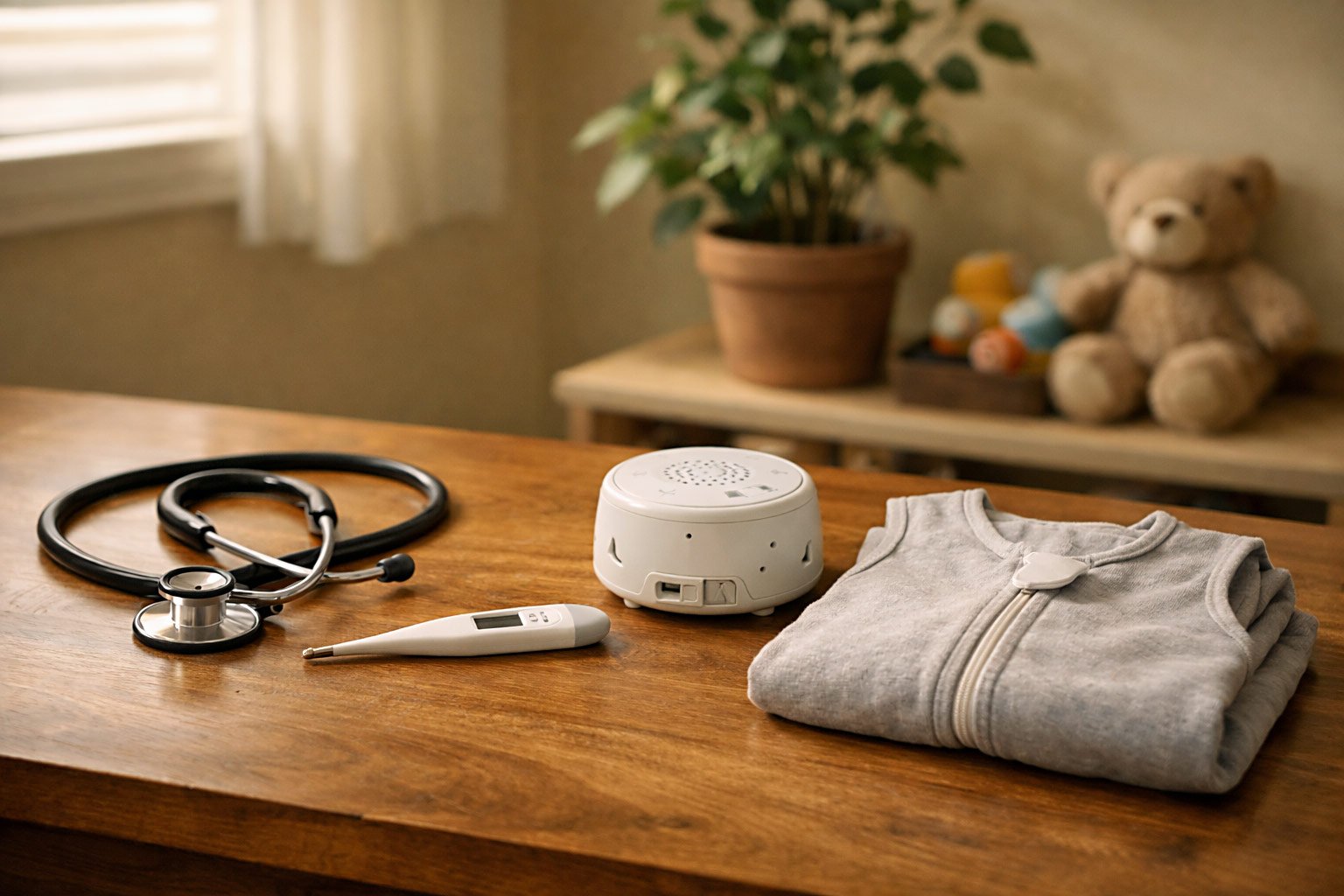
What pediatricians buy for their own kids is rarely what’s trending on Instagram — and that gap is worth understanding before you spend a dollar on a baby registry. Gregory has watched many humans prepare for babies. And one thing stands out every single time: the nursery Instagram grid and the pediatrician’s office are operating in completely different universes.
On one side: aesthetically perfect, wood-toned everything. Bluetooth-enabled everything. Subscription boxes of things that smell like lavender and cost like cashmere.
On the other side: a doctor who has spent years treating actual babies, had actual children themselves, and quietly reached for a $12 nasal aspirator instead of the $89 “smart” one. What pediatricians buy for their own kids tends to be unglamorous, evidence-based, and often under $20.
This article is about that gap and what falls into it.
We dug into what pediatricians, the American Academy of Pediatrics (AAP), and child development specialists actually recommend, use themselves, and see results from. You might be surprised how often the unglamorous, inexpensive choice wins.
And no shade to anyone who bought the fancy stuff. Gregory himself is a donkey of expensive taste. But when it comes to your baby’s health and safety, boring and evidence-based is usually the right move.
New parents are one of the most aggressively targeted consumer demographics on Earth. Fear, love, and sleep deprivation make for a potent combination — and baby product marketers know exactly how to press all three buttons simultaneously.
The result? A $67 billion global baby products industry filled with gear that ranges from genuinely essential to aggressively useless — and the difference is rarely obvious from an Instagram reel.
The magic word is “pediatrician-approved.” It appears on packaging constantly. But it’s worth asking: approved by whom? For what? Under what conditions? Because the AAP — the actual governing body for pediatric medicine in the US — has pretty clear guidance, and it often contradicts the products waving that phrase around.
When pediatricians and pediatric physical therapists evaluate baby gear, they consider four factors: safety, developmental support, simplicity, and longevity. Not aesthetics. Not Bluetooth connectivity. Not whether it matches the nursery palette.
Here’s what that looks like in practice:
These aren’t necessarily dangerous — but they’re products that show up frequently in influencer content and less often in pediatric recommendations.
The pitch: a sock, patch, or device that tracks your baby’s oxygen levels and heart rate, sending alerts to your phone the moment something seems off.
The reality: the AAP does not recommend these consumer-grade monitors for healthy full-term babies — and pediatricians report that they generate enormous parental anxiety from false alarms. One pediatrician at Parkview Health noted they regularly field panicked calls from parents whose healthy babies triggered constant alerts.
Gregory’s Take: The only monitor you actually need is one that lets you hear or see the baby. Everything else is a subscription to worry.
A classic of the “sounds nice, creates problems” category. Wipe warmers dry out wipes, can create bacterial growth if not cleaned regularly, and train babies to expect warm wipes, which creates a whole new problem when you’re not at home. Most pediatricians simply… don’t have them.
Pediatric physical therapists are particularly vocal about this one. Baby walkers place infants in an upright position before their muscles are developmentally ready, which can contribute to toe walking, tight Achilles tendons, and delayed independent walking. They’re also a significant fall hazard. Canada banned them outright.
The irony is that they’re one of the most gifted baby items on earth. If you receive one, return it and put the money toward a good play mat.
They look sleek. They’re fast. They’re unreliable for babies under 6 months because the ear canal is too small and curved for an accurate reading. The AAP recommends rectal thermometers for infants, and pediatricians use them for their own children, even though they know how much fun that is.
This website contains affiliate links. As an Amazon Associate, I earn from qualifying purchases. The content on this website was created with the help of AI.
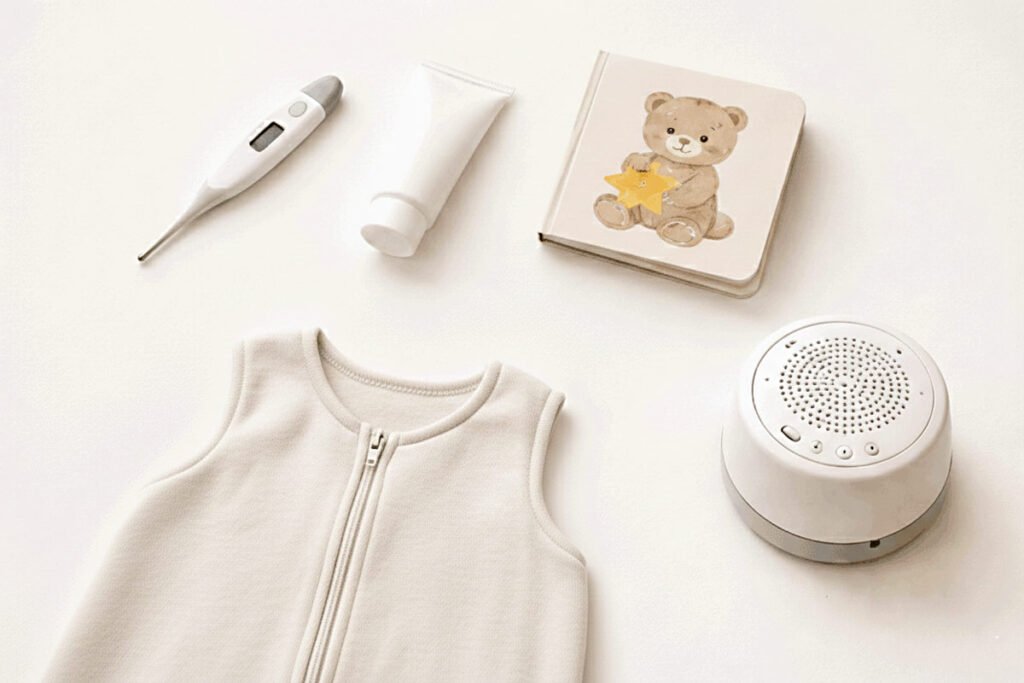
This is the stuff that shows up again and again when pediatricians, pediatric nurses, and child development specialists talk about what they choose for their own households. The pattern of what pediatricians buy for their own kids is consistent, unglamorous, and surprisingly affordable. That’s rather the point.
Yes, it looks alarming. Yes, it works. The NoseFrida is a tube-based nasal aspirator that parents use to clear infant congestion — and it comes up constantly in pediatrician-to-parent conversations because the bulb syringe (that free hospital freebie) simply doesn’t create enough suction. Pediatricians who are parents buy this for their own newborns.
Unglamorous? Very. Accurate? Completely. The AAP recommends rectal temperature as the most reliable method for infants under 3 years old. A simple digital rectal thermometer — dedicated solely to that use, clearly labeled — is what pediatric households actually keep in the medicine cabinet.
→ Find infant thermometers on Amazon
Not an app. Not a musical mobile. A dedicated machine with consistent, non-variable sound output. White noise masks sudden household sounds that trigger the Moro (startle) reflex, helping babies link sleep cycles. It also creates a reliable sleep cue that travels with you. Simple, effective, boring. Pediatric households swear by them.
→ Find white noise machines on Amazon
Once a baby begins showing signs of rolling (typically around 8 weeks), certified sleep consultants and pediatricians unanimously recommend transitioning from a swaddle to a wearable sleep sack. Loose blankets are a SIDS risk. The key detail pediatricians watch for: hip-healthy design—a wide bottom that allows the natural frog-leg position, which helps protect against hip dysplasia.
Pediatric physical therapists are very clear on this: babies need unrestricted floor time, not “container” devices that hold them in one position. A good foam play mat supports tummy time, which the National Institutes of Health identifies as essential for preventing flat head syndrome and building core muscles. No Bluetooth required.
Pediatricians want a simple moisture barrier. A high zinc oxide concentration (40%, like Desitin Maximum Strength) is the clinical go-to. If you want a cleaner formulation, look for non-nano zinc oxide with organic ingredients and zero synthetic fragrance. What pediatricians don’t reach for: pretty-packaged creams full of fragrance and filler ingredients.
→ Find diaper rash cream on Amazon
This one surprises a lot of new parents. Reading aloud to a newborn feels a bit performative — they can’t understand words. But pediatricians consistently recommend it because, even before language comprehension, babies are building auditory pattern recognition, vocabulary, and connections with their caregivers. Board books beat every “educational” infant screen product on the market, full stop.
→ Find baby board books on Amazon
Here’s the at-a-glance version:
| Product Category | The Instagram Hype | What Pediatricians Actually Use |
|---|---|---|
| Rectal Thermometer | Ear/forehead thermometers (cute but inaccurate for infants) | ✅ AAP gold standard for babies under 3 years |
| Nasal Aspirator | Bulb syringe (hospital freebie) | ✅ Frida NoseFrida — pediatricians buy this for their own kids |
| White Noise Machine | Musical mobiles & womb-sound apps | ✅ Dedicated machine with consistent decibel output |
| Baby Monitor | Expensive medical-grade O2 monitors (cause anxiety, flagged by AAP) | ✅ Simple audio/video monitor without biometric alerts |
| Swaddle / Sleep Sack | Crib bumpers, loose blankets, sleep positioners (dangerous) | ✅ Wearable sleep sack — hip-healthy design |
| Play Mat | Baby walkers & jumpers (PT red flags) | ✅ Large flat foam mat for tummy time & free movement |
| Diaper Rash Cream | Fragrance-added or petroleum-forward brands | ✅ Plain zinc oxide paste (Desitin Max) or clean organic formula |
| Baby Carrier | Novelty “smart” carriers with unnecessary tech | ✅ Ergonomic carrier (M-position for hips) |
| Breast Pump | Premium brand pumps when insured pump is equivalent | ✅ Check insurance — hospital-grade flanges > brand prestige |
| Baby Book Library | Screen-based “educational” apps for infants | ✅ Board books — reading aloud from birth builds language skills |
This isn’t a manifesto against baby products. Some aesthetically lovely things are also genuinely excellent. A Doona car seat/stroller combo is both beautiful and brilliantly functional. A Snoo smart bassinet has real data behind its efficacy for some families (though the price is a lot to swallow).
The question to ask isn’t “is this pretty?” or even “is this expensive?” It’s: “What problem does this solve, and does anyone with clinical training recommend it?”
If the answer is yes, buy it with confidence. If the answer is “it looked amazing in a reel,” Gregory recommends a strategic pause.
Understanding what pediatricians buy for their own kids comes down to one consistent pattern: they strip it back to what actually works — what’s safe, what supports development, and what holds up under exhaustion and real life.
The hype isn’t always wrong. But the default should be: when in doubt, go boring. A $12 nasal aspirator recommended by every pediatric nurse in the room beats the $90 one that photographs better every time.
Gregory’s Final Verdict: The best baby products are the ones your pediatrician casually mentions without being asked. That’s the whole list. Everything else is negotiable.
For the most comprehensive, medically vetted guidance on baby product safety and development, consult the American Academy of Pediatrics:
HealthyChildren.org — American Academy of Pediatrics (AAP) Official Parent Resource
HealthyChildren.org is the AAP’s official parent-facing website, with evidence-based guidance on safe sleep, product safety, feeding, and developmental milestones. No affiliate revenue, no sponsored placements — just what the medical community actually recommends.